

AI Rewrites the Semiconductor Cycle: Why Memory Is the New Star of the AI Supercycle

Daily Market Read I | Category: Sector Read | Date: May 12, 2026
Tiger Capital Research
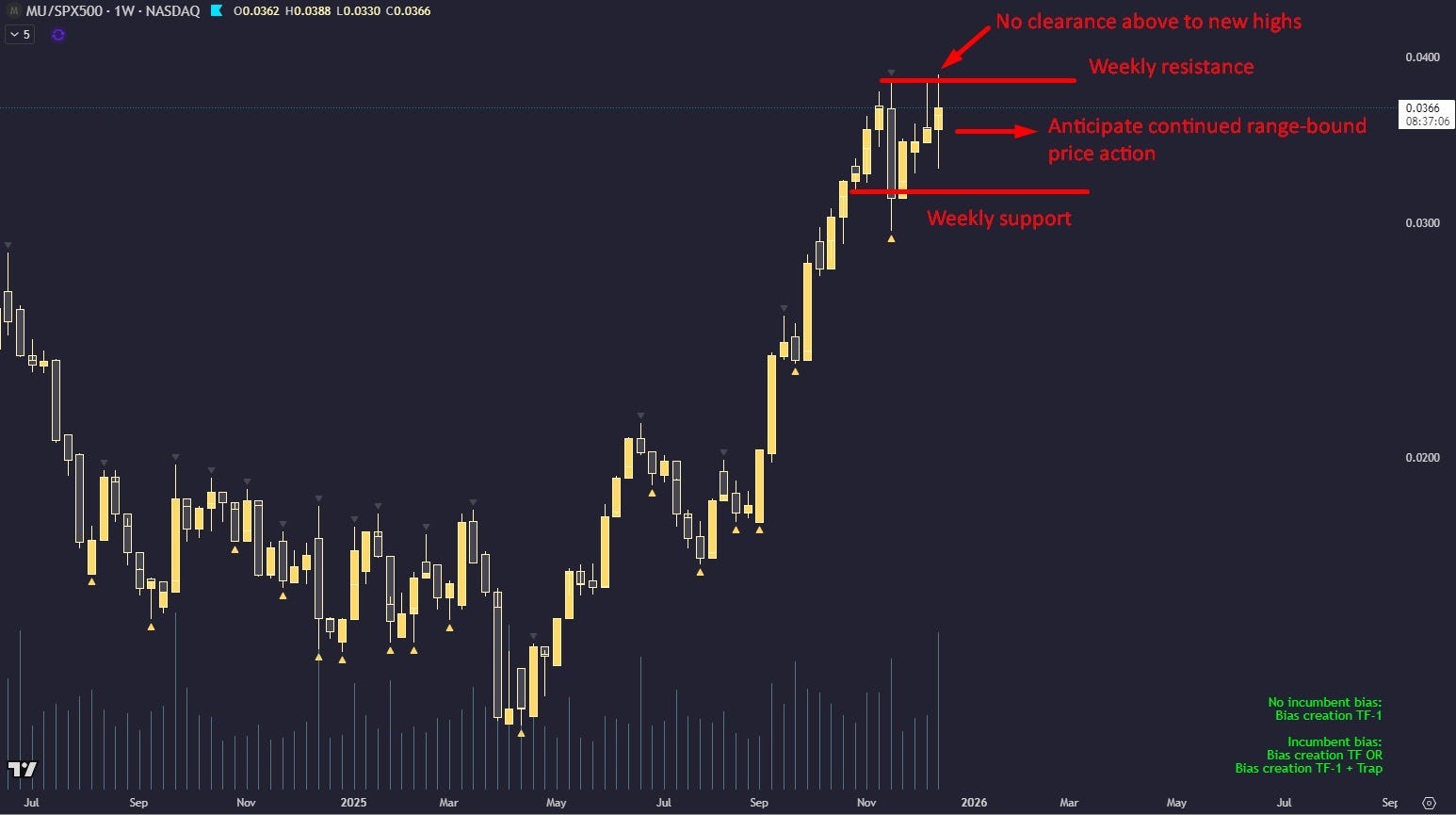
The semiconductor market is experiencing a quiet but profound regime shift. While NVIDIA has captured most of the headlines over the past two years, investor capital has rotated aggressively toward memory and storage names since early May. What was long regarded as a classic cyclical, commodity-like sector is now being repriced as a high-margin, structurally advantaged layer in the AI stack.
The numbers tell the story. Micron Technology has surged nearly 179% year-to-date, significantly outperforming both the Philadelphia Semiconductor Index and the broader S&P 500. SK Hynix has hit all-time highs, and Kioxia’s stock has multiplied roughly 24 times over the past year. These moves go well beyond a typical cyclical recovery: they reflect a fundamental change in how the market views memory’s role in the AI era.
The driver is clear: AI workloads place extreme demands on memory bandwidth, capacity, and latency. High-bandwidth memory (HBM) and high-performance DRAM/SSD have become genuine bottlenecks. Larger models, longer context windows, and exploding inference and agent workloads mean that even the most powerful GPUs cannot deliver their full potential without sufficient memory support. This has turned memory from a standardized commodity into a scarce, strategic asset.

The scale of demand is unprecedented. Morgan Stanley estimates that global AI-related infrastructure investment could approach $3 trillion by 2028, with more than 80% of that spending still ahead. For 2026 alone, major technology companies are projected to spend over $700 billion on AI infrastructure: a sharp increase from 2025 levels. Hyperscalers are now signing long-term contracts, funding dedicated production lines, and even supporting equipment purchases to lock in supply well into 2027. This level of customer commitment is fundamentally altering the old memory cycle dynamics.
The implications extend across the Asian hardware ecosystem. Advanced packaging, power management, optical modules, and cooling systems are all seeing accelerated capital flows. For the first time in many cycles, memory leaders are enjoying improved pricing power, higher profit visibility, and sustained order backlogs rather than the usual boom-bust pattern tied to consumer electronics.
Of course, risks remain. A slowdown in AI capital expenditure, faster-than-expected efficiency gains in models, eventual supply response, and geopolitical factors could all introduce volatility. Execution and capital discipline will matter. Yet the current setup suggests this cycle has more staying power than historical memory booms, driven by structural infrastructure demand rather than end-consumer gadget sales.
For investors, the message is that AI is not just about GPUs anymore. Memory and storage have moved from supporting roles to center stage in the AI infrastructure stack: and the market is beginning to price that reality in.
Tiger Capital Research